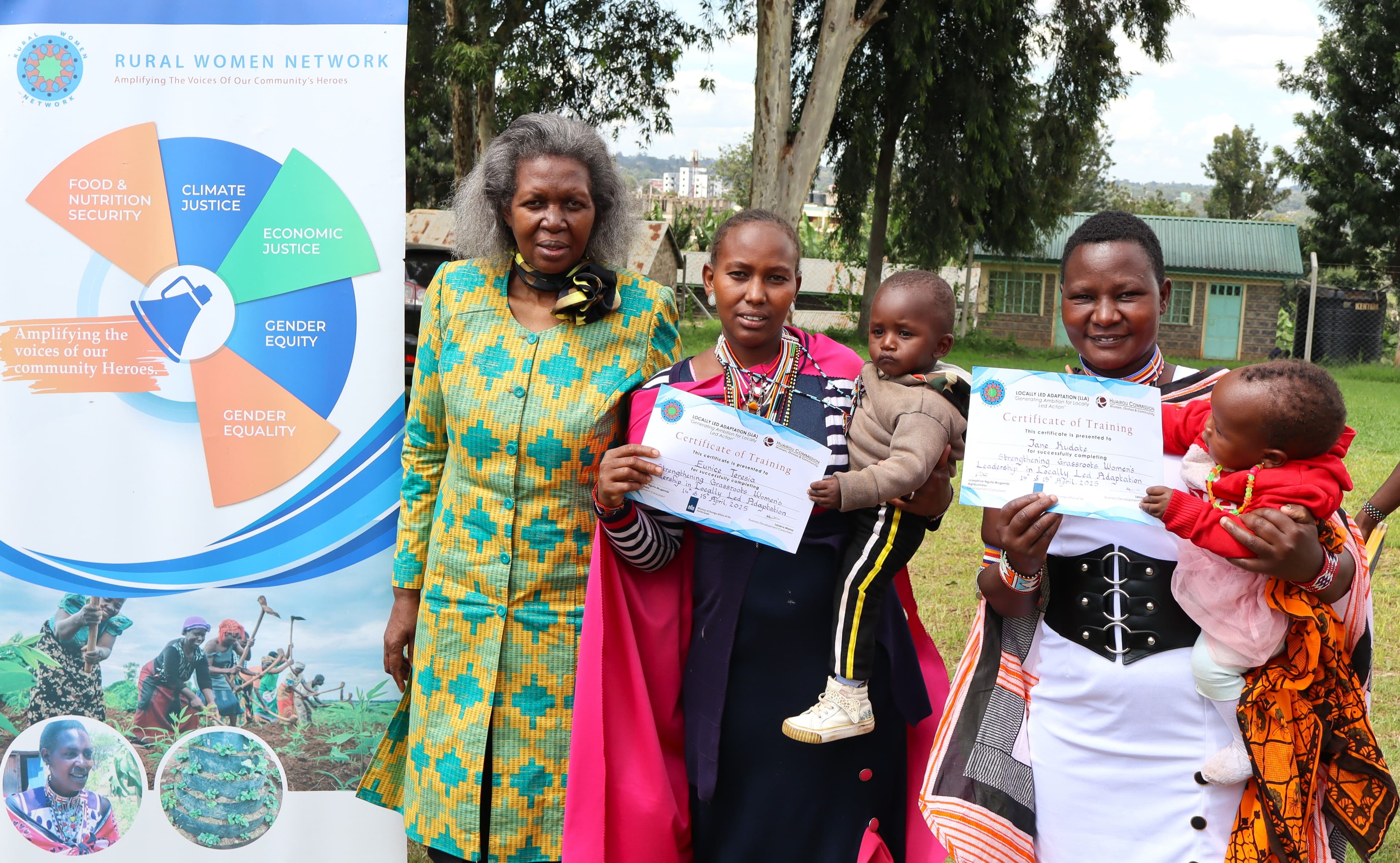
In the dry, sunbaked plains of Ewuaso, Kajiado County, the story of survival is one of resilience. Here, women have long carried the weight of feeding their families amid scarce rains, failed crops, and shrinking livelihoods. For many years, poverty and dependency defined daily life.
But, through the FAIR for ALL Project implemented by the Rural Women Network (RWN), a quiet revolution has begun, that is the one where women are discovering the strength hidden in unity, savings, and financial knowledge. Women who once struggled to make ends meet are now building financial independence, one shilling at a time.
The Beginnings: Small Savings, Big Dreams
For years, women in Ewuaso relied on inconsistent incomes from beadwork, casual labor, and small livestock. Droughts that frequently swept across Kajiado often wiped out what little progress they made.
"We would start something, then the rains failed, and everything ended," recalls Mary Teka, one of the earliest members of a local savings group.
When the FAIR for ALL Project, implemented by the Rural Women Network (RWN), introduced Village Savings and Loan Associations (VSLAs), it felt like a new beginning. The concept was simple where each woman would contribute a small amount weekly, however little, to build a communal fund. Over time, members could borrow from this fund to meet family needs, start small enterprises, or cushion against emergencies.
Financial Literacy: Understanding the Power of Planning
Saving was only the first step. RWN quickly realized that empowerment without knowledge would not last. The project began offering financial literacy training through workshops for TOTs and at Livelihood Learning Centres (LLCs), teaching women how to manage household budgets, record income and expenses, and plan for both short- and long-term goals.
Women were taught the basics of budgeting, goal setting, and record keeping. They learned the importance of separating business and household finances, distinguish between needs and wants, to record their daily earnings, allocate savings toward productive investments. The foundation was set for growing even small savings into something powerful.
From VSLAs to Multi-Purpose Cooperative Societies
Through village-based savings and loans associations (VSLAs), women began to save a few shillings weekly. What seemed like a small act became the foundation for independence. The FAIR for ALL Project helped these groups to evolve from informal structures into formal Multi-Purpose Cooperative Societies enabling the women to access larger loans, purchase inputs collectively, selling collectively and manage finances transparently.
"When I save, I feel free," one participant shared. "I no longer wait for help; I plan my own future."
Investing in Livelihoods: Turning Savings into Strength
With improved financial literacy, women began to think like entrepreneurs. They started small businesses like selling beadwork, poultry, vegetables, and dairy products. Profits were reinvested into savings, creating a virtuous cycle of growth and security.
RWN's training on Climate-Smart Agriculture (CSA) ensured that these ventures were not only productive but sustainable. Women learned to grow drought-tolerant crops like amaranth, cowpeas, and African nightshade, to use organic manure, and to conserve water through drip irrigation and container gardening.
Partnership and Collaboration
The success of the financial empowerment initiative in Ewuaso was built on a strong foundation of collaboration between the Rural Women Network (RWN), local government structures, and financial institutions. RWN worked closely with the Kajiado County Department of Gender and Social Services to identify active women's groups and integrate them into the FAIR for ALL Project.
The Cooperative Bank of Kenya partnered in providing basic banking orientation and helping groups open savings accounts which is a crucial step toward financial inclusion.