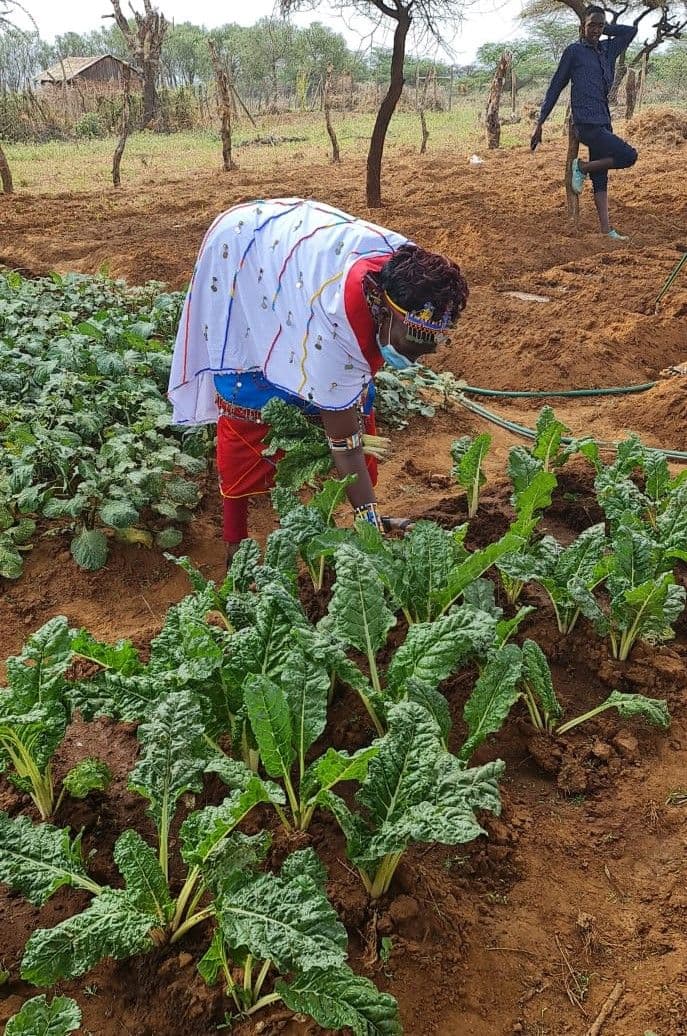
In Kajiado County, where the sun often blazes relentlessly across dry fields and rivers fade to dusty trails, the word "resilience" has taken on a deeper meaning. For generations, families have faced cycles of drought that left their livestock weak, their crops withered, and their hopes dimmed.
Yet amid these challenges, the women of Kajiado guided and supported through the FAIR for ALL Project under the Rural Women Network (RWN) have cultivated something extraordinary i.e. resilience that grows from the soil, flows through their cooperatives, and thrives in their communities.
Seeds of Change in Dry Soil
The story of resilience here is not abstract. It is visible in the green patches of amaranth and cowpeas that now brighten once-barren compounds. It is seen in the kitchen gardens built from recycled containers and the water pans fenced and protected by women's groups.
"We used to think drought meant hunger," said one farmer from Iloodokilani. "Now, we see it as a challenge we can prepare for."
Building Livelihoods Beyond Rainfall
That preparation has become the foundation of resilience. Across RWN's project areas, women have adopted water-efficient techniques such as drip irrigation, cone gardens, and sunken beds. They are harvesting rainwater, using organic compost, and planting drought-tolerant crops like green grams and pigeon peas.
The cooperative model has amplified this impact. Through the FAIR for ALL Project, women's savings groups have evolved into registered cooperatives institutions that not only promote collective marketing but also provide credit and social safety nets.
"When I fall, my group lifts me," says one member from Ewuaso. "That is what resilience means to us."
Women Leading the Way
FAIR for ALL's holistic approach linking agriculture, financial literacy, and leadership has proven essential in strengthening resilience. Through training in savings, governance, and marketing, women have learned to manage their resources wisely and make informed decisions.
The environmental impact has also been profound. Through RWN's leadership, communities have begun to value conservation practices such as tree planting and soil restoration. Women now understand that protecting the environment is inseparable from protecting their livelihoods.
Tags
Related Programs
Climate Smart Agriculture Training
Training on climate-resilient farming techniques, drought-resistant crops, and weather adaptation strategies for sustainable agriculture.
WASH (Water, Sanitation & Hygiene)
WASH (Water, Sanitation & Hygiene) focusses on water conservation and Women’s involvement in resource management