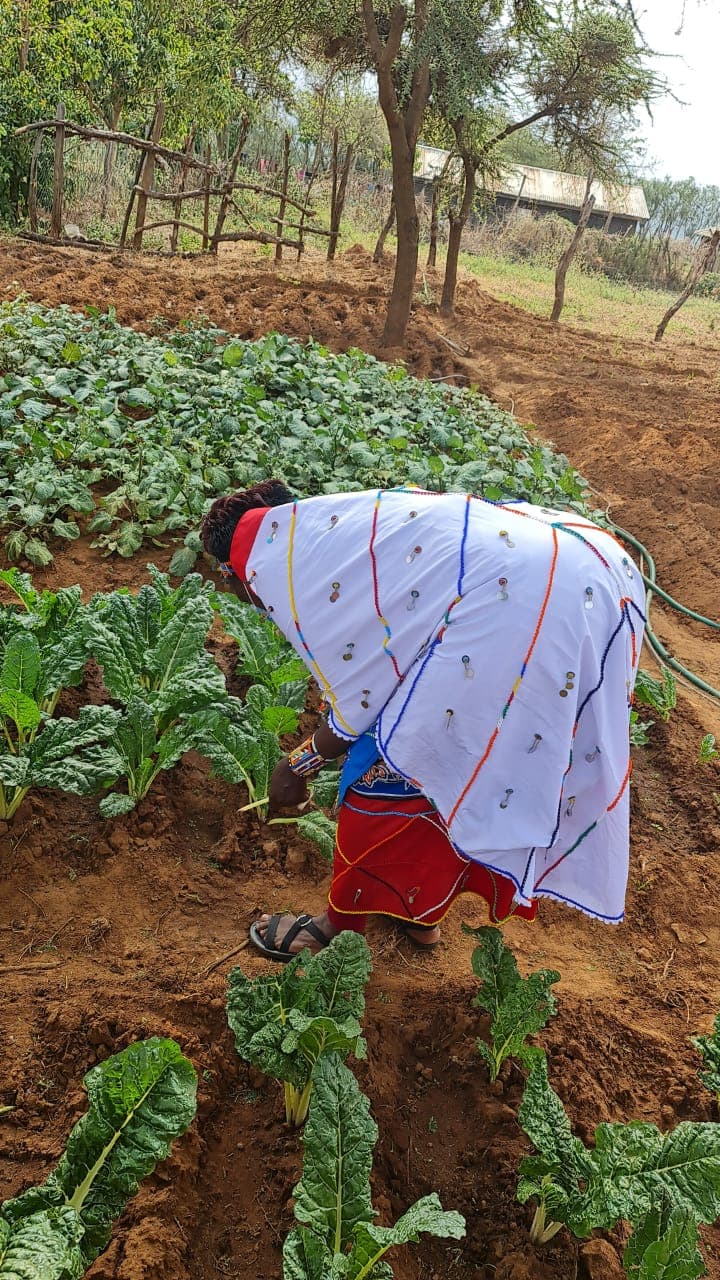
Across Kajiado County's dry and dusty landscape, women are rediscovering the hidden treasures of their own heritage — indigenous vegetables. Once dismissed as "poor people's food," these African Leafy Vegetables (ALVs) are now at the center of a quiet nutritional and economic transformation led by grassroots women through the FAIR for ALL Project under the Rural Women Network (RWN).
Women across Ewaso, Keekonyokie, and Iloodokilani are leading this transformation, proving that the path to food security begins with rediscovering what the land already knows.
Reviving Traditional Knowledge
For decades, changing food habits, urban influence, and reliance on exotic vegetables like kale and cabbage eroded traditional diets. Yet these imported vegetables often required more water and chemical inputs which is both scarce and costly in arid regions. Through FAIR for ALL, RWN set out to reverse this trend by reviving nutrient-rich, drought-tolerant vegetables such as amaranth, cowpeas, spider plant, and African nightshade.
Women in project areas such as Ewuaso, Keekonyokie, and Iloodokilani were trained on how to grow these vegetables using minimal water and organic farming techniques. They learned about seed selection, preservation, intercropping, and composting.
Nutrition: Feeding Families the Right Way
The return of African leafy vegetables has transformed not just the farms but the plates. Families that once depended heavily on maize or relief food now enjoy diverse, balanced meals rich in vitamins, minerals, and protein. Children are healthier, and cases of malnutrition have visibly decreased.
RWN's Livelihood Learning Centres (LLCs) have been central to this revival. Established in the three regions, the centres serve as living classrooms where women see the techniques in practice and exchange experiences.
From Kitchen Gardens to Market Stalls
As gardens thrived, RWN introduced training on value addition and market linkages. Women learned to process, package, and sell surplus vegetables to local schools, hotels, and markets. The income from vegetable sales is reinvested into other activities which includes poultry farming, water storage, or paying of school fees.
Partnership and Collaboration: Scaling the Vision
The FAIR for ALL Project supported the development of the African Leafy Vegetables Strategy for Kajiado County, in collaboration with the County Government. This five-year plan formally recognizes ALVs as key to food security, nutrition, and climate resilience.
"When women lead in food production, communities eat better, this strategy gives recognition to their work and ensures they are supported at the policy level." says Pauline Kariuki, RWN Program director.